
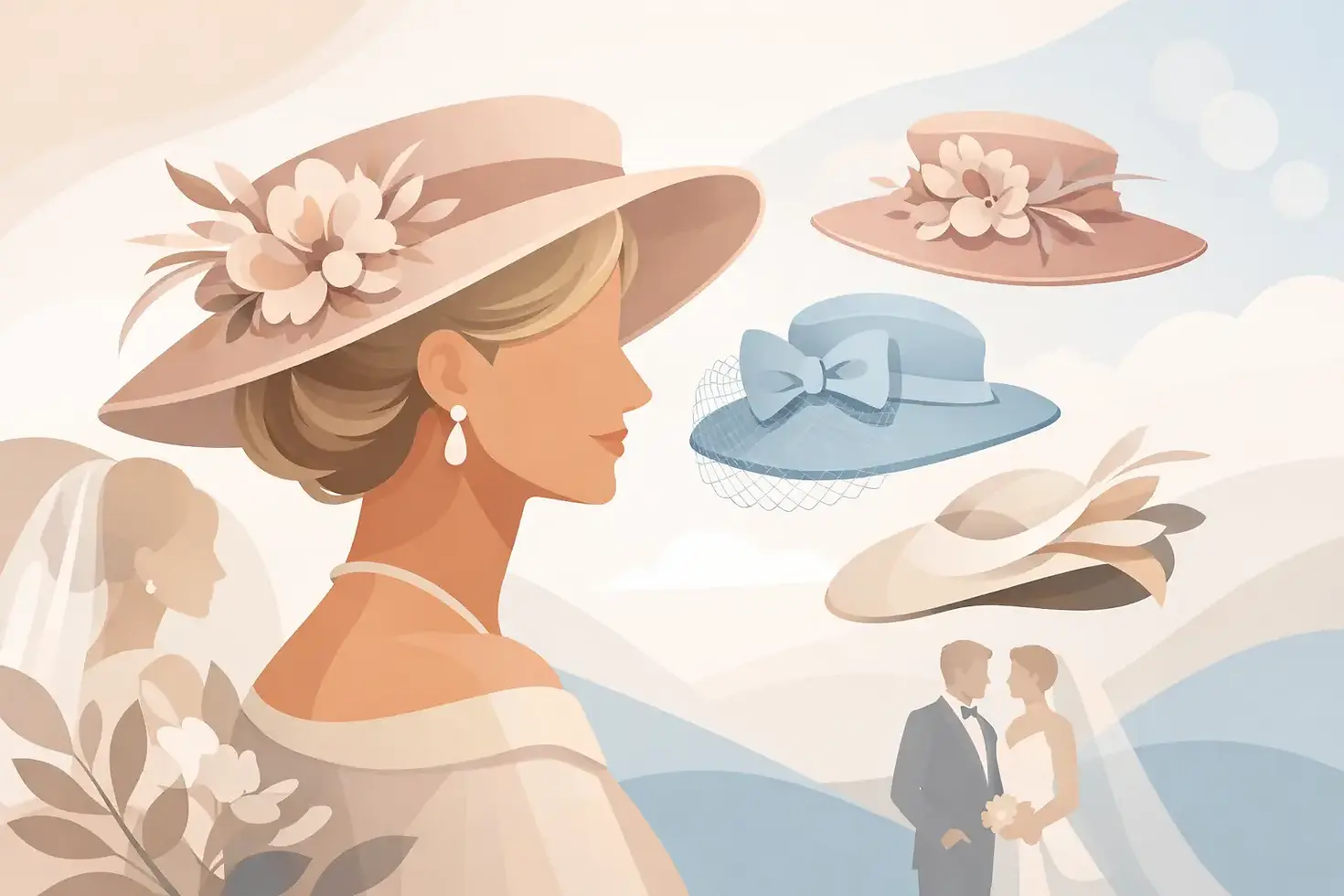
Mother of the Bride Hats That Feel Right
The right hat changes everything. A beautifully judged piece brings composure to the entire look - not just the dress, but the way you enter the room, greet guests, and stand beside your daughter in photographs that will be kept for decades. That is why mother of the bride hats deserve more thought than a last-minute accessory purchase.
For this role, millinery should feel polished, flattering, and entirely appropriate to the setting. It is not about competing with the bride, nor about disappearing into the background. The best choice sits in that precise couture balance: distinctive, elegant, and fully considered.
What makes mother of the bride hats work
A successful hat begins with proportion. Scale is everything. A wide dramatic brim may be exquisite at a formal country house wedding, yet too commanding for an intimate city ceremony. A sculpted percher or refined saucer can feel sharper and more contemporary, especially when the outfit already carries detail through lace, beading, or a strong silhouette.
The face matters just as much as the dress. The best millinery frames rather than obscures. It should lift the eye, soften the jawline, and sit comfortably for hours. A hat that is technically impressive but awkward to wear rarely looks luxurious in practice. Ease is part of elegance.
There is also the question of presence. Mothers of the bride often want something memorable, but with restraint. That usually means choosing shape, line, and craftsmanship over excess decoration. Fine sinamay, hand-formed curves, delicate featherwork, silk finishes, and precise trimming have far greater impact than anything overworked.
Choosing mother of the bride hats for the setting
The venue and dress code should guide the direction from the start. A cathedral wedding with a formal daytime reception calls for a different level of millinery than a beach ceremony or a modern rooftop celebration.
For a traditional church wedding, hats with clear structure tend to feel most appropriate. Picture elegant brims, sculptural crowns, or refined saucer shapes worn with tailored dresses or softly cut coats. These styles hold their own in ceremonial spaces and read beautifully in formal photography.
For a garden wedding, lighter construction often feels better. Airier shapes, softer trims, and a sense of movement can be especially flattering outdoors. You still want definition, but not stiffness. The hat should feel in harmony with natural light, floral surroundings, and a slightly more relaxed atmosphere.
For modern city weddings, many women prefer clean architectural pieces. A sharply angled percher, a sleek button hat, or an asymmetric silhouette can look exceptionally chic. These styles pair well with streamlined dresses and refined separates, offering elegance without looking overly traditional.
If the celebration spans several settings, from ceremony to evening reception, versatility becomes more important. In that case, a hat with balanced scale and secure, comfortable fit is worth prioritizing over something theatrical that may feel less manageable later in the day.
Color should complement, not compete
Color matching is where many otherwise beautiful looks lose their polish. Exact matching can be striking, but it is not always the most sophisticated option. Often, the most luxurious effect comes from tonal harmony rather than duplication.
If the outfit is a soft dove blue, for example, the hat may look richer in a related silver-blue, pale slate, or soft metallic finish. If the dress is blush, a hat in rose, nude, or a subtle champagne tone may bring more depth. Texture influences color too. Silk catches light differently from sinamay, and what appears identical on a swatch may read differently once shaped.
Neutrals are frequently underestimated. Ivory, taupe, mist, soft navy, and warm stone can be remarkably elegant, especially when the outfit fabric carries pattern or embellishment. They also tend to photograph well across daylight and indoor lighting.
That said, some weddings invite a stronger statement. If the bridal party palette is restrained, a jewel-toned hat can bring distinction. The key is making that choice with intention. A confident color should still feel connected to the full ensemble, not isolated from it.
Shape, face, and hairstyle
The most flattering mother of the bride hats are not chosen in isolation. Face shape, hairstyle, height, and posture all affect the final result.
Women with delicate features often suit lighter, lifted designs that do not overwhelm the face. A sharply oversized brim can dominate unless it is expertly balanced. Stronger features can carry broader lines and more sculptural volume with ease. That is one reason bespoke millinery remains so valued - adjustments in angle, crown height, and trim placement make an enormous difference.
Hairstyle should be considered early, not after the hat is chosen. A neat chignon, soft blowout, cropped cut, or swept-up style will each change the way a hat sits and the way it is seen from the front and side. Volume at the crown can interfere with fit, while sleek styles often allow a cleaner line.
Comfort is technical, not incidental. The internal finish, comb placement, elastic, banding, and overall weight all matter. A hat that shifts during greetings, photographs, and movement will never feel fully composed. True luxury millinery is as carefully engineered inside as it is outside.
Hat or headpiece?
Not every mother of the bride wants a full hat, and not every wedding calls for one. A couture headpiece can offer a slightly lighter, more contemporary alternative while retaining all the refinement expected for a formal occasion.
A headpiece may be the stronger option if the outfit has a modern silhouette, the wedding is later in the day, or the wearer simply feels more comfortable in a smaller form. Structured bows, sculptural loops, hand-curved feathers, and elegant veiling can create presence without the visual weight of a brim.
A full hat, however, still carries a particular authority. For highly traditional weddings, stately venues, and events with a strong sense of ceremony, it often remains the most appropriate choice. It depends on the balance of the entire look and the confidence of the woman wearing it.
When bespoke makes the difference
Ready-to-wear can be excellent when the shape, tone, and scale are already right. But for women who want a truly precise finish, bespoke millinery offers a different level of assurance.
A commissioned piece allows the hat to be designed around the outfit rather than forced to work with it. Fabric references, exact color matching, venue, season, and personal style can all be considered from the beginning. The result is not simply coordination. It is cohesion.
This is particularly valuable when the dress has an unusual tone, when the event is exceptionally formal, or when the wearer wants something distinctive without being overstated. Couture millinery also allows for nuance in proportion. A brim can be reduced by an inch, a trim softened, a profile sharpened. Those subtle decisions are often what separate a pleasant outfit from a truly distinguished one.
For clients seeking that level of finish, working with an established London couture milliner such as Judy Bentinck offers both craftsmanship and confidence. The piece is not only designed to suit the occasion. It is designed to suit the wearer.
Common mistakes to avoid
The most common mistake is choosing too late. Once the dress is purchased, many women treat the hat as a final add-on, when in fact it should be part of the styling conversation much earlier. This is how proportions clash, tones miss the mark, or limited time forces a compromise.
Another mistake is relying entirely on trend. Fashion matters, of course, but occasionwear has its own codes. What looks striking on a runway or in an editorial image may not translate well to a church service, a family receiving line, or six hours of wear.
It is also easy to misjudge scale online. A hat can appear light and elegant in product photography, yet feel larger in person, especially on a petite frame. Equally, a very small piece may disappear in a formal setting. This is where expert guidance matters.
Finally, avoid over-accessorizing. If the hat is intricate, let jewelry remain restrained. If earrings are substantial, the millinery may need to be cleaner. The most refined looks are edited, not crowded.
The look should feel like you
The finest mother of the bride hats do not wear the woman. They reveal her at her most polished. Whether the answer is a dramatic brim, an elegant saucer, or a sculptural headpiece, the aim is the same: grace, assurance, and a sense that every detail has been handled beautifully.
When a piece is right, you feel it immediately. The outfit settles. Your posture changes. Photographs become easier. And on a day when emotion is already running high, there is real luxury in wearing something that feels entirely resolved.
Choose the hat that brings quiet confidence, not hesitation. That is usually the one that lasts in memory.


Comments