
What Is a Percher Hat? A Couture Style Guide
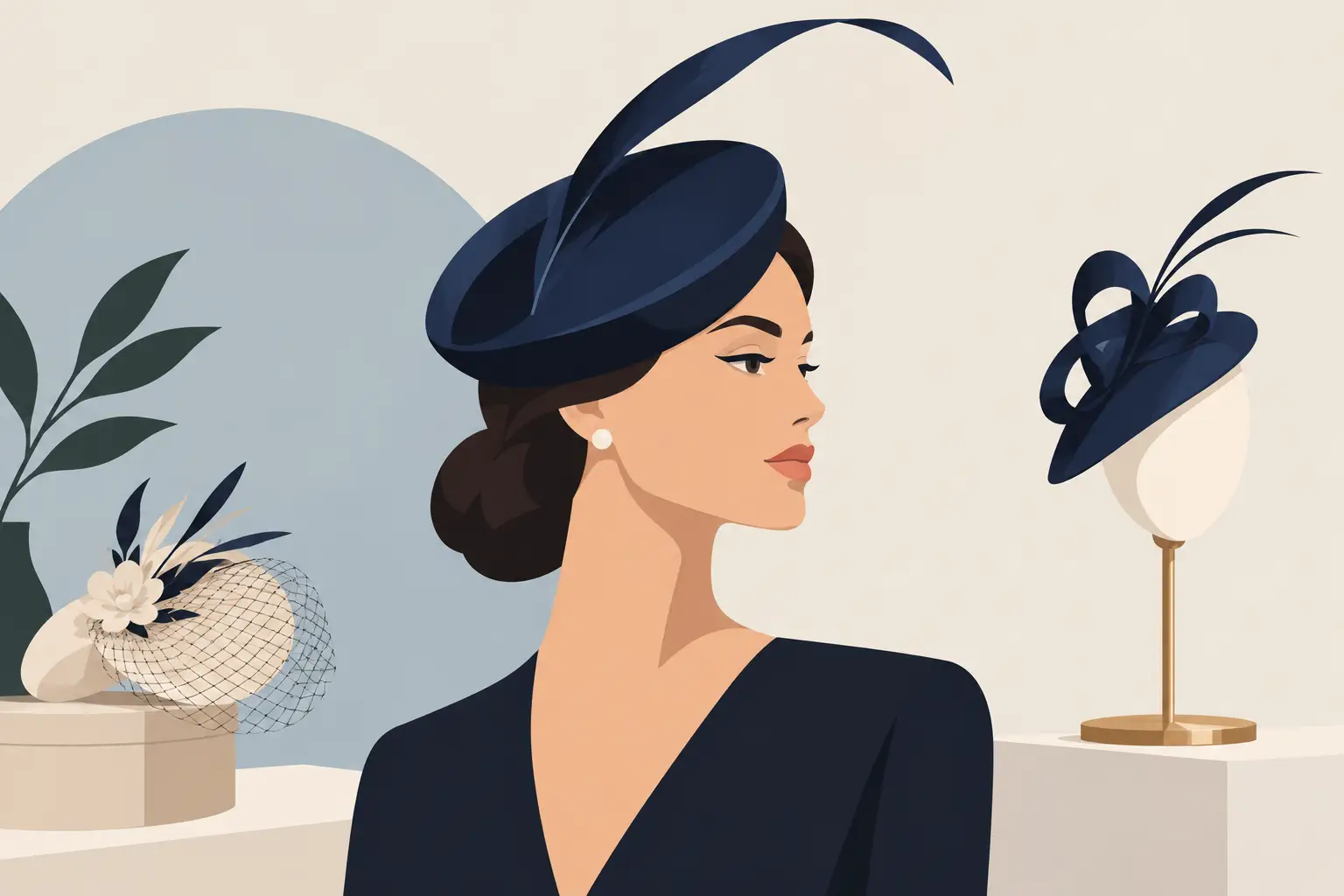
A percher hat creates its effect through placement. Rather than covering the head in the traditional manner of a broad-brimmed hat, it sits at an angle, seemingly poised on the hair with quiet assurance. If you have been asking, “what is a percher hat?”, it is a small, sculptural hat designed to perch on the head, usually toward one side, for a refined and beautifully considered occasionwear look.
For weddings, race meetings, and formal celebrations, it offers an elegant answer to a common dressing question: how to wear a true hat while retaining lightness, visibility, and a contemporary silhouette. A well-made percher feels effortless to the wearer, yet its balance, proportion, and finish are the result of precise millinery technique.
What Is a Percher Hat?
A percher is a compact hat with a shaped base that rests securely on the head rather than enclosing the crown. It may be crafted from sinamay, straw, felt, silk, or finely blocked fabric, then finished with hand-shaped trims such as sculptural bows, quills, veiling, flowers, feathers, or tonal embroidery.
The name comes from the way it is worn: perched. Its base is carefully contoured to follow the curve of the head, allowing the design to sit high, low, forward, or to one side according to its intended line. Unlike a large-brimmed picture hat, a percher does not rely on scale. Its presence comes from form, material, and an exact relationship with the face and hairstyle.
This is why perchers are so often chosen for occasions where a full hat might feel too formal or visually dominant. They carry the distinction of couture millinery without obscuring the wearer’s expression, beautiful tailoring, or jewelry.
A Percher Is Not Simply a Fascinator
The terms are often used interchangeably, but they describe different types of headwear. A fascinator is generally a decorative headpiece, often constructed around a small base or attached to a headband, comb, or clip. It may be made primarily from trim - feathers, loops, flowers, or veiling - and does not necessarily have a hat-shaped foundation.
A percher, by contrast, has a defined hat base. Even when it is small, it is blocked, shaped, and structured as a hat. That distinction gives it more architectural presence and makes it a particularly polished choice for a formal daytime event.
There is, of course, room for overlap. Contemporary millinery is not always ruled by rigid labels, and some pieces combine the lightness of a fascinator with the disciplined construction of a hat. The useful question is not only what it is called, but how it sits, how it frames the face, and whether it has the quality to hold its shape throughout the day.
A hatinator is another related style. Usually larger than a percher and smaller than a traditional hat, it often uses a brim-like disc or sweeping silhouette mounted on a headband. A percher tends to feel closer, more compact, and more integrated with the wearer’s head shape.
Why Percher Hats Are So Flattering
The appeal of a percher lies in its restraint. It introduces height, movement, and occasion without requiring a large brim. This makes it especially appealing for guests who want to look distinctly dressed for the moment while preserving a clean, modern profile.
Its asymmetry can also be exceptionally flattering. A design angled slightly across the forehead or set above one temple directs the eye upward and lengthens the silhouette. The right curve can soften strong tailoring, balance a wide neckline, or add definition to a fluid silk dress.
The effect depends on proportion. A petite wearer may favor a small, lifted percher with a fine flourish rather than a wide, heavy trim. Someone wearing a sharply cut suit may choose a more graphic shape with crisp lines. For a mother of the bride or groom, a sculptural percher in a considered neutral or custom-matched shade can feel ceremonial without competing with the bridal party.
Color matters as much as scale. A tonal piece creates an elegant, uninterrupted look, while a contrast percher can bring a deliberate note of drama to a simple dress. Navy with ivory, soft rose with deep berry, or black with a jewel-colored accent can be striking when the materials are chosen with sophistication.
How a Percher Hat Stays in Place
A couture percher should never feel precarious. The apparent lightness is supported by discreet, practical engineering. Depending on the design and hairstyle, it may be secured with a fine headband, an elastic that sits beneath the hair at the nape, a comb, or small millinery loops and pins.
The best fastening method depends on the piece. A headband offers ease and can be ideal for smooth hair or guests who prefer a straightforward fit. An elastic can be almost invisible and provides excellent security for a lighter, more elevated design. Pins offer flexibility but should be positioned carefully, particularly if the hair is freshly washed or very fine.
Before a major event, it is wise to try the hat with the intended hairstyle. An updo, low chignon, polished ponytail, or softly waved hair can all work beautifully, but each changes the available anchoring points. If your hair appointment is on the morning of the event, bring the percher with you so your stylist can prepare the hair with its placement in mind.
Comfort is equally significant. A properly fitted percher should feel stable without pressure at the temples or behind the ears. If you are attending a long wedding, lunch, or race day, choose a piece you can wear with confidence rather than one you will be tempted to adjust every half hour.
When to Wear a Percher Hat
Percher hats are natural choices for formal daytime occasions. They are especially suited to wedding guests, civil ceremonies, garden parties, luncheons, charity events, and race-day dressing. Their compact scale also makes them practical where seating is close, greetings are frequent, and photographs are part of the occasion.
For Royal Ascot and other dress-code-led events, a percher can be an elegant choice, though requirements vary by enclosure and are subject to change. Always review the current rules before selecting your piece. Where a hat is specifically required, choose a design with a substantial enough base to read unmistakably as millinery rather than as a decorative fascinator.
A percher is also a compelling option for a destination wedding. It travels more easily than a sweeping brimmed hat, although it should still be carried in a proper hat box and never packed beneath clothing. Delicate trims, hand-dyed materials, and fine veiling deserve protection from crushing, moisture, and heavy perfume.
Styling a Percher With Your Outfit
Begin with the outfit’s strongest line. If your dress has volume at the shoulder, a low neckline, or statement sleeves, a neat percher can provide balance without adding unnecessary width. If the outfit is minimalist, the hat can take a more expressive role through a dramatic sweep, layered texture, or finely placed veil.
Avoid treating the hat as an afterthought. The most successful looks are considered as a whole: dress, shoes, handbag, jewelry, hairstyle, and millinery working in harmony. Exact matching is not always necessary. In fact, a slightly nuanced variation in tone often appears more luxurious than a head-to-toe match.
For black-tie evening events, a percher may be less conventional than it is for daytime, but the setting determines the answer. A sleek cocktail hat in black, metallic, or rich jewel tones can be exquisite for an evening reception, gala, or formal city wedding. The design should be refined, and the materials should complement the depth and polish of eveningwear.
The Value of a Bespoke Percher
Because a percher relies so closely on angle and proportion, bespoke millinery offers a meaningful advantage. A consultation allows the design to be considered against your face shape, outfit, coloring, hairstyle, and event setting. It also makes it possible to match fabric or develop a color that complements rather than merely repeats your ensemble.
At Judy Bentinck, couture headpieces are shaped with this personal relationship in mind. The final piece should feel as though it belongs to the wearer, not simply as an accessory but as the finishing gesture that gives an occasion outfit its authority.
A percher hat is small by design, but it should never feel insignificant. Choose one with a beautiful line, secure fit, and finish worthy of the occasion, then wear it with the composure that makes fine millinery truly memorable.


Comments