

Bridal Headwear Guide for a Polished Look
- judybentinck
- Jul 8
- 6 min read
A wedding look is rarely finished when the dress arrives. The final note often sits above the shoulders - a veil that softens the silhouette, a sculpted headpiece that sharpens it, or a couture hat that gives the entire ensemble its point of view. This bridal headwear guide is designed for brides who want that decision to feel considered, elegant, and fully in keeping with the occasion.
The right piece does more than coordinate. It frames the face, balances the gown, and sets the tone of the day. It can make a minimalist dress feel ceremonial or bring restraint to a gown with intricate detail. That is why bridal headwear deserves the same attention as tailoring, fabric, and jewelry.
A bridal headwear guide begins with the dress
Headwear should never compete blindly with the gown. It should respond to it. A clean architectural dress can carry a stronger statement - perhaps a sculptural halo, a tailored bandeau, or a contemporary hat for a civil ceremony. A gown with elaborate lace, dimensional appliqué, or heavy beading usually calls for more discipline overhead. In those cases, the finest choices tend to be lighter in line and more selective in embellishment.
Neckline matters just as much as decoration. Strapless and off-the-shoulder gowns often welcome volume or width because the décolletage leaves visual space to fill. High necks, cap sleeves, and dresses with significant shoulder detail usually benefit from something more refined and lifted, rather than broad or sprawling. If the dress already has strong presence at the neckline, the headpiece should complement without overcrowding.
Fabric also changes the conversation. Silk mikado, duchess satin, and crepe have a crisp authority that pairs beautifully with structured millinery. Tulle and chiffon tend to suit softer movement. Lace can go in either direction, but it needs editing. Too much vintage reference can quickly feel costume-like unless handled with precision.
Veil, headpiece, or hat?
The most suitable bridal headwear is often determined by the character of the wedding. A veil remains the natural choice for a traditional ceremony, particularly in a church or formal venue, because it carries a sense of ritual that few other accessories can replace. It can be ethereal and understated, or dramatic enough to define the walk down the aisle.
A headpiece offers greater flexibility. This is often the answer for brides who want polish without convention, or who want a second look for the reception without changing the spirit of the outfit. Comb-mounted designs, halos, delicate bands, and asymmetric pieces all allow for expression while keeping the look modern.
A bridal hat is more directional, and therefore more dependent on confidence, styling, and setting. For a city wedding, registry office ceremony, garden wedding, or fashion-led celebration, a hat can be exceptionally chic. It creates presence immediately. The trade-off is that it asks the rest of the styling to stay disciplined. Hair, jewelry, and dress line all need to support it rather than compete.
Face shape and proportion matter more than trends
Fashion shifts quickly, but proportion always wins. The most flattering bridal headwear works with the face and posture of the wearer, not simply with what is currently popular.
If the face is petite, a very large-scale piece can dominate unless it is handled with transparency or lightness. If the face has stronger angles, softer curves in the design can be beautiful. For rounder features, a little height or asymmetry often adds definition. None of these are rigid rules, but they are useful principles. The eye should move naturally from the face to the headpiece and back again.
Height matters too. A tall bride can often carry breadth and drama with ease. A more petite frame may look more elegant in a piece with lift rather than width. Hairstyle changes scale as well. An updo can support structure and show the neck beautifully, while loose hair tends to favor pieces that feel integrated rather than heavily perched.
This is where couture millinery distinguishes itself from generic occasion accessories. Fine headwear is not just decorative. It is engineered to sit correctly, flatter from every angle, and remain comfortable throughout the day.
How formality shapes the choice
The venue and order of service should guide the tone. A cathedral wedding invites a different level of formality than a destination ceremony by the water. Likewise, a luncheon reception differs from a black-tie evening celebration.
For highly formal weddings, long veils, structured headpieces, and refined embellishment tend to feel right. Pearls, hand-shaped silk flowers, fine veiling, and carefully placed crystal can all work beautifully when applied with restraint. For intimate or contemporary weddings, simpler pieces often feel more luxurious because they look intentional rather than overworked.
Season also influences material. Spring and summer weddings can carry lighter textures, airy veiling, and floral references. Fall and winter often suit richer surfaces, satin finishes, velvet trims, or pieces with a little more sculptural weight. The goal is not to match the weather literally, but to ensure the headwear feels native to the moment.
The role of color in a bridal headwear guide
Many brides assume everything must be bright white. In practice, that can be one of the least flattering choices, especially against ivory, champagne, blush, or warm-toned silk. White next to ivory can read stark. Soft ivory against optical white can read dull. Precision matters.
The most elegant bridal styling comes from tonal harmony. The headwear should speak the same language as the dress, whether that means a close match or a deliberate contrast in texture rather than shade. A silk-covered band in the exact tone of the gown can be exquisite. So can a veil that is slightly softer in color if it improves the complexion.
If embellishment is involved, the metal tone should also be considered. Silver, gold, and pearlized finishes each affect the mood. Cool crystal on a warm ivory gown can feel slightly disconnected. Warm metallic embroidery on a bright white dress may look less crisp than intended. These are small details, but luxury is often the sum of small details handled properly.
Embellishment should have a clear purpose
Beading, lace appliqué, feathers, silk flowers, and crystals can all be extraordinary, but only when they belong. The best bridal headwear never looks decorated for decoration's sake. Each element should add light, structure, softness, or distinction.
If the gown already carries extensive detail, the headpiece may only need one refined gesture - a line of pearls, a tailored sweep of veiling, or hand-worked silk petals placed with restraint. If the gown is almost austere, the headwear can take on more of the expressive role. That balance is what creates a polished whole.
There is also the question of longevity. Brides often want photographs that feel timeless in ten or twenty years. That does not mean avoiding fashion entirely. It means choosing a design with integrity. A contemporary silhouette grounded in fine craftsmanship usually ages far better than a trend-driven piece overloaded with motifs.
Bespoke versus ready-to-wear
Not every bride needs a bespoke commission, but some do. If the dress has a very specific neckline, a difficult shade, or a distinct architectural quality, bespoke is often the most elegant route. It allows the headwear to be scaled precisely, color matched carefully, and designed around hairstyle, venue, and personal taste.
Ready-to-wear can be ideal when the bride wants a beautifully resolved design without a long lead time. The best collections already reflect considered proportion and craftsmanship, so the process becomes one of selecting the right piece rather than inventing one from the beginning.
The decision often comes down to how exacting the brief is. Brides with a strong point of view, unusual requirements, or multiple events may appreciate the refinement of custom work. Those who respond to a finished piece immediately may find that ready-to-wear offers everything they need with greater efficiency. At Judy Bentinck, both approaches are treated with the same couture standard.
Timing, fittings, and practical comfort
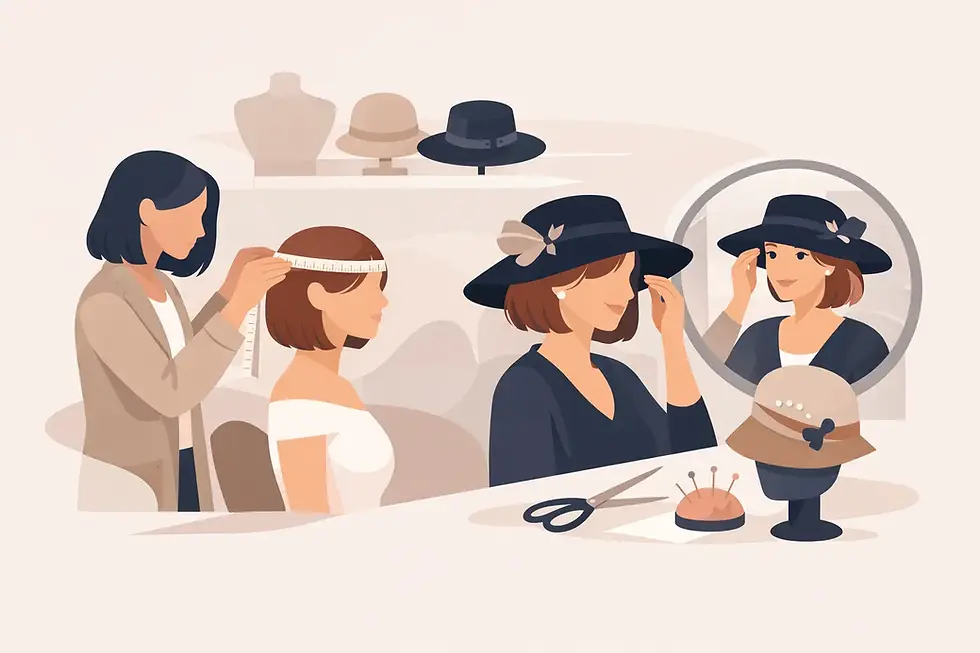
Bridal headwear should not be an afterthought purchased a week before the wedding. It needs time for decisions, fittings, and, where relevant, alterations. Hair trials are particularly helpful because placement changes everything. A piece that seems modest on the stand can look dramatic once positioned, while a larger design may feel unexpectedly effortless when balanced correctly.
Comfort matters more than many brides expect. If a headpiece pinches, slides, or feels unstable, it will affect posture and confidence. The finest designs are light where they should be light and secure where they must be secure. You should not spend the day adjusting them.
Photographs are another practical test. Bridal headwear should look beautiful in person, of course, but it should also read clearly on camera from the front, side, and three-quarter view. Pieces with thoughtful dimension tend to perform best because they offer interest without confusion.
The right bridal headwear does not simply finish an outfit. It gives the bride a sense of poise that can be felt in every entrance, every photograph, and every conversation. Choose the piece that makes the entire look feel resolved - not louder, not busier, simply complete.


Comments