
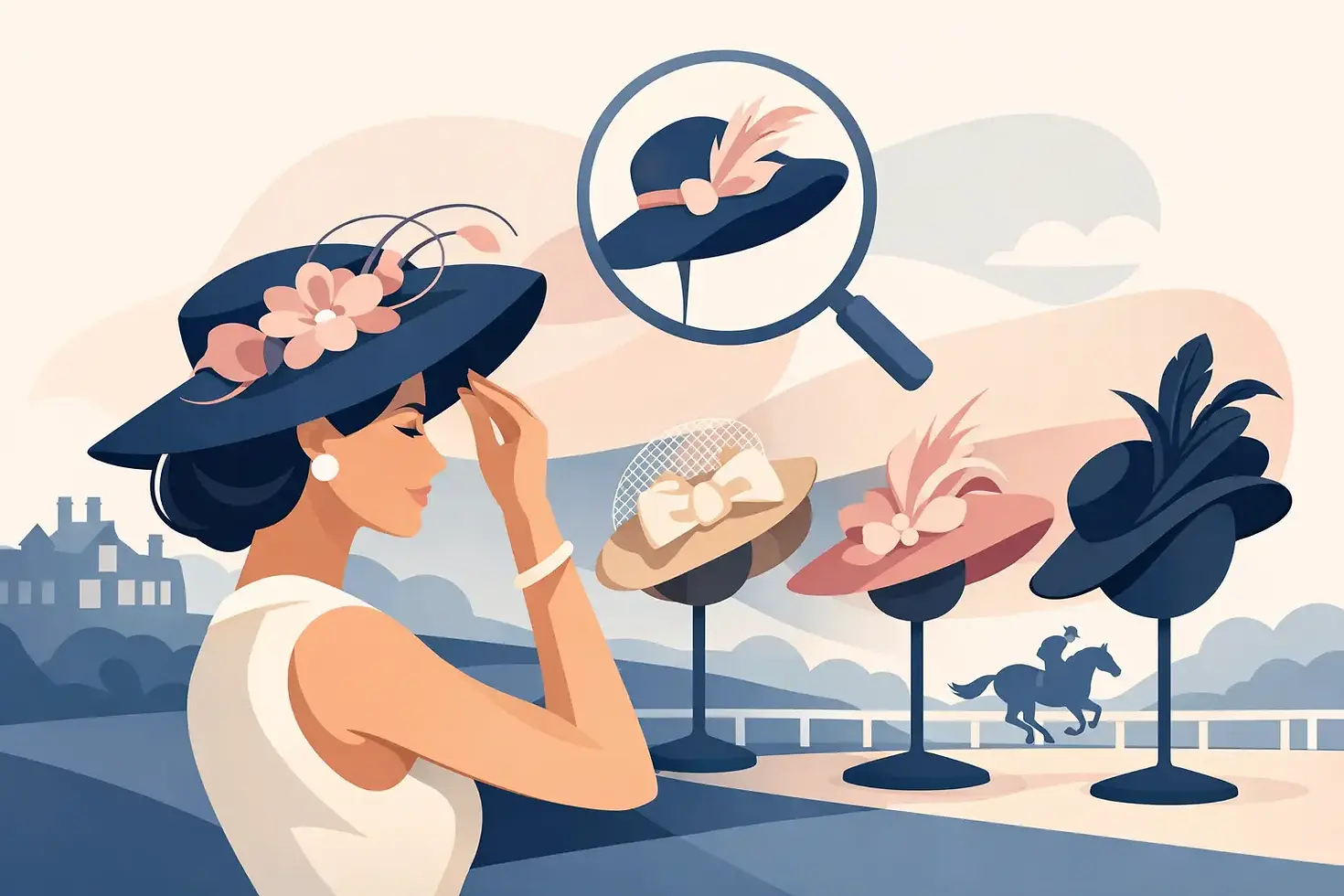
How to Choose Ascot Millinery With Confidence
- judybentinck
- 54 minutes ago
- 6 min read
Royal Ascot is one of the few occasions where millinery is not an afterthought. It is integral to the silhouette, the dress code, and the sense of occasion. Knowing how to choose ascot millinery begins with recognizing that the right piece should do more than coordinate with an outfit. It should frame the wearer beautifully, hold its presence in a grand setting, and feel composed from the first arrival through the final race.
For American guests, Ascot can feel particularly distinctive: the scale is formal, the traditions are observed, and the photographs are plentiful. A well-chosen hat or headpiece brings confidence to the day. A hurried choice can make even the most exquisite dress feel unfinished.
Begin With Your Enclosure and Dress Code
Before considering shape, color, or embellishment, establish where you will be seated and the current dress requirements for your enclosure. Royal Ascot dress codes are detailed and may be refined from year to year, particularly for the Royal Enclosure. Review the official guidance for the year of your visit before committing to a look.
The key distinction is usually between a hat and a smaller headpiece. Certain enclosures have specific expectations around the size and style of headwear, while others offer more freedom for sculptural fascinators, perching pieces, and elegant headbands. A couture milliner can help interpret these requirements without compromising the individuality of your look.
This first decision influences everything that follows. A broad-brimmed hat has a different visual language from a refined button hat or a feathered headpiece. The former can create magnificent drama and shade; the latter may feel lighter, more contemporary, and easier to wear for a long social day. Neither is inherently more elegant. The right choice depends on the enclosure, your outfit, and the impression you want to make.
How to Choose Ascot Millinery for Your Proportions
The most successful millinery is proportionate. It does not compete with the wearer, nor does it disappear in a crowd. Consider your height, hairstyle, shoulder line, and the volume of your dress before being drawn to a particular design.
A larger brim can be striking on a tall figure or with a clean, column-like dress. It also offers the kind of visual authority that Ascot does so well. However, a generous brim should be carefully balanced. If your dress has dramatic sleeves, a full skirt, or elaborate texture, a sculptural but more compact hat may create a more polished result.
Petite women often look exceptional in a precisely angled perching hat, a disciplined halo shape, or a headpiece with height rather than width. The eye is drawn upward, lending stature without overwhelming the frame. Taller women can carry wider brims and stronger architectural forms beautifully, though the crown and trim should still feel elegant rather than theatrical.
Your face shape matters, but it should not become a rigid rule. A tilted brim can soften angular features, while a clean, lifted line can bring definition to a rounder face. The more useful question is where the hat directs the eye. A piece that rises gently at the side, for example, can create a graceful line through the cheekbone and neck.
Consider the hairstyle before the final fitting
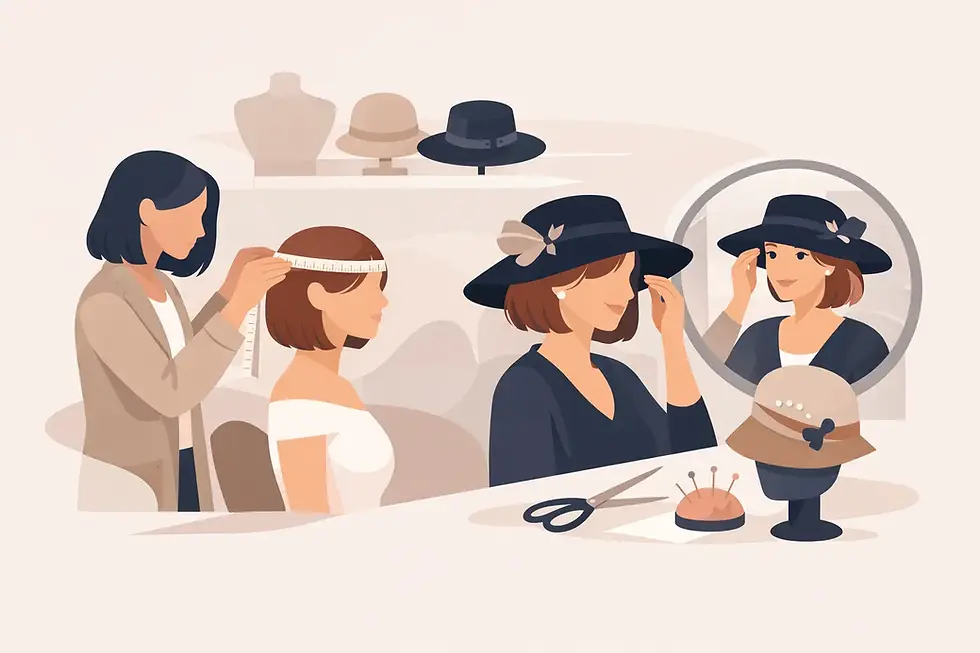
Hair and millinery should be planned together. A low chignon, polished ponytail, soft waves, and a short cropped style each alter the balance of a hat. If you expect to wear your hair up, bring photographs or arrange your fitting with your intended hairstyle in mind.
A bespoke piece can be fitted to sit at exactly the right angle and secured discreetly for comfort. This is especially valuable if you are unused to wearing hats or expect a full day of walking, dining, and conversation outdoors.
Let the Outfit Lead, Not Dictate
Matching a hat exactly to a dress can be beautiful, particularly when a custom color is developed from the same fabric reference. Yet exact matching is not the only route to a luxurious finish. Tonal dressing often looks more considered: a soft oyster hat with a warm ivory dress, a pale blue headpiece with a navy suit, or a petal-pink trim against a rich raspberry gown.
Look first at the dominant tone of the outfit, then at the undertones. A dress that appears cream may carry yellow, pink, gray, or peach beneath the surface. These subtle differences are where couture color matching makes its mark. A hat in the wrong white can look disconnected in daylight, while a carefully selected neutral appears effortlessly harmonious.
If your outfit has print, embellishment, or bold texture, millinery should often provide a point of calm. Choose one color from the print and let the shape remain clean. Conversely, a simple monochrome dress may welcome a more expressive treatment: hand-shaped bows, veiling, feathers, sinamay sculpture, or a contrasting underside of the brim.
Shoes and bag should support the look rather than dictate the hat. Matching every accessory can feel overly literal. It is usually more sophisticated to create a deliberate color story with two or three related tones and one controlled point of contrast.
Choose Materials That Hold Their Beauty All Day
Ascot is an outdoor occasion, and English summer weather can be gloriously bright, unexpectedly breezy, or both within an hour. Material is therefore not merely decorative. It affects comfort, durability, and how the design responds to movement.
Fine sinamay offers a light, airy structure and is a classic choice for sculptural occasion hats. Straw can have a more textural, summery character, while silk and satin bring softness and formal sheen. Veiling, feathers, and hand-formed flowers offer movement, but they should be used with discipline. The finest pieces retain their shape and presence without requiring constant adjustment.
A hat should also be light enough to wear with ease. Couture construction is as much about the interior as the visible design: balanced weight, thoughtful placement of the band, and secure but gentle fittings. During an appointment, wear the piece for longer than a few seconds. Turn your head, look down, embrace someone, and sit as you would at lunch. Elegance is far more convincing when it is comfortable.
Think About Photography and Social Ease
Ascot millinery will be seen from every angle. It may appear in arrival photographs, garden portraits, table conversations, and candid images taken in strong daylight. Ask to view your chosen shape from the front, profile, and back, not only in a mirror.
A brim that looks magnificent from the side may cast too much shadow across the face in photographs. A piece with all its detail concentrated at the back may be missed in most social interactions. The finest designs consider the full 360-degree view, with a focal point that enhances rather than obscures the face.
It is also considerate to think about those seated beside you. A very wide brim can be marvelous for an outdoor reception, but may be less practical at a closely arranged dining table. This does not mean avoiding scale. It means selecting a shape whose drama is intelligent and purposeful.
Allow Time for Couture Decisions
Ready-to-wear millinery can be an excellent choice when you have found a piece that feels immediately right and suits your outfit perfectly. It offers the pleasure of selecting a finished design with a clear point of view. For guests working to a shorter schedule, it can be the most practical route to a polished Ascot look.
Bespoke millinery offers a different experience. It is ideal when you want a precise color match, have a particularly significant dress, need a shape adjusted to your proportions, or simply want to wear something no one else will have. A consultation allows the milliner to consider the complete picture: your enclosure, dress, hairstyle, jewelry, travel plans, and personal style.
Do not leave the decision until the final week. The most refined choices are rarely made under pressure, and bespoke work requires time for design, material selection, fittings, and finishing. If you are traveling from the United States, plan how the piece will be carried as well. A properly sized hat box and careful handling are part of protecting a couture investment.
At Judy Bentinck, the most memorable Ascot pieces are created around the woman wearing them, not simply the dress she has chosen. Whether you select a ready-to-wear design or commission a one-of-a-kind hat, choose the piece that makes you stand taller, smile more freely, and feel entirely at ease in the occasion. That quiet certainty is always the most elegant finishing touch.


Comments