

Designer Headpieces for Special Occasions
- judybentinck
- Jul 28
- 6 min read
A remarkable outfit can lose its composure the moment the wrong hat is added. Designer headpieces for special occasions are not an afterthought: they establish proportion, frame the face, and bring the entire look into focus. For a wedding at a country estate, Royal Ascot, an investiture, or a formal garden party, the right millinery should feel considered from every angle and entirely at ease with the occasion.
A couture headpiece does more than satisfy a dress code. It carries the quiet assurance of skilled handwork, carefully judged scale, and a design made to be worn rather than merely admired. The distinction lies in the details: a line that complements the shoulders, a crown that sits securely, and a finish that remains elegant through photographs, conversation, and a full day of celebration.
Begin With the Occasion, Not the Hat
The venue, time of day, and formality of an event should guide the choice before color or decoration enters the conversation. A grand church wedding followed by a formal reception calls for a different silhouette than a destination ceremony or an outdoor luncheon. For race-day dressing, a statement hat or sculptural headpiece may be entirely appropriate, while a diplomatic reception often favors restrained sophistication and immaculate finishing.
Dress codes matter, particularly at traditional British events. Royal Enclosure dressing at Ascot has specific expectations around hats and headpieces, while weddings offer greater freedom but still require sensitivity to the setting and the bridal party. If an invitation is understated, the millinery should not compete with the host's intentions. If the event is ceremonial, however, a beautifully constructed piece can give a simple dress the authority it needs.
The most successful choice considers the full day. Will there be a long drive, an outdoor ceremony, a crowded reception, or changing weather? A piece that looks exquisite for ten minutes but feels precarious by noon is rarely the luxury experience a special occasion deserves.
Choosing Designer Headpieces for Special Occasions
Let proportion lead
Scale is the first principle of elegant millinery. A wide brim can be breathtaking, but it needs enough space around the wearer to make sense. In an intimate city venue, a compact percher or sculpted cocktail hat may have greater presence than an expansive picture hat. At a garden party or race meeting, a broader silhouette has room to perform.
Facial features, hairstyle, and shoulder line all influence proportion. A headpiece angled slightly to one side can lengthen the profile and bring attention to the eyes. A taller crown may balance a fuller skirt or structured tailoring. The aim is not to follow a rigid rule, but to achieve visual harmony. An experienced milliner sees how the line of a hat will converse with the line of a neckline, sleeve, or coat.
It also helps to consider photography. A beautifully designed headpiece should offer interest from the front, side, and back, especially when guests are likely to be photographed throughout the day. Couture construction gives this dimensional quality a sense of intention rather than excess.
Match color with precision
Color matching is often misunderstood as finding the exact same shade as a dress. Sometimes that is the correct approach, particularly for a polished mother-of-the-bride ensemble or a tailored formal look. More often, tonal coordination creates a richer result. A headpiece may pick up the undertone of a silk print, echo the trim of a shoe, or introduce a complementary shade that brings warmth to the complexion.
For pale neutrals, consider whether the undertone is cool, warm, or softly muted. Ivory, oyster, blush, stone, and champagne can appear very different in daylight. Strong colors require the same care. A red dress may be elevated by a deeper berry, soft rose, or rich burgundy headpiece rather than a literal match.
Bespoke color matching is particularly valuable when an outfit has been chosen for a once-in-a-lifetime event. It allows the milliner to work with swatches and assess materials in person, ensuring that sinamay, silk, feathers, and embellishment retain their elegance in natural and indoor light.
Choose materials that suit the season
Material is not simply decorative. It affects weight, structure, comfort, and how a piece responds to light. Fine sinamay offers a crisp, sculptural finish suited to spring and summer occasions. Silk abaca can give a luminous, textured surface. Felt and velvet lend depth to autumn and winter dressing, while carefully placed feathers or veiling add movement without compromising refinement.
There is a trade-off between dramatic structure and effortless wear. A large sculptural piece may be perfect for a major race-day appearance, but a lighter, close-fitting design can be more practical for a wedding involving travel and a long reception. The finest designer headpieces make comfort part of the design rather than a concession to it.
Ready-to-Wear or Bespoke: Which Is Right?
A ready-to-wear couture collection is ideal when the date is approaching and a client has found a design that feels immediately right. It offers the pleasure of selecting a completed piece with a defined artistic point of view, often with scope for thoughtful styling guidance. A collection design can be especially effective when the outfit is monochrome, tailored, or simple enough to let the headpiece provide its signature.
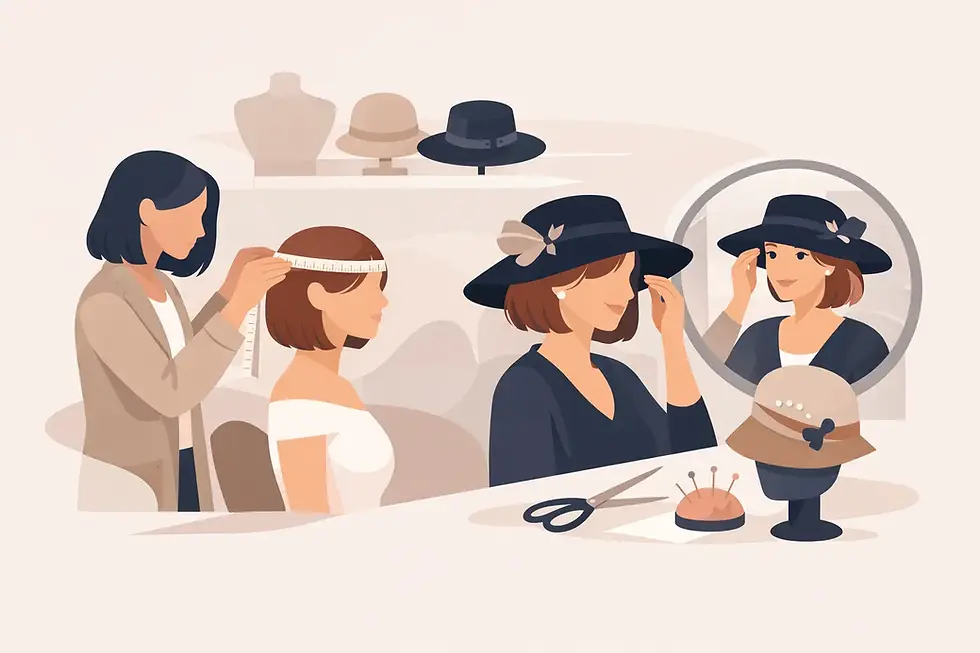
A bespoke commission offers a different level of personal service. It is the natural choice when the outfit has an unusual color, the event is especially significant, or the wearer wants a design that is truly her own. During a consultation, the milliner can consider dress fabric, silhouette, height, hairstyle, complexion, and the character of the occasion. The result is not merely coordinated. It is composed.
Bespoke work also allows for a more exact relationship between personality and design. Some clients want architectural drama; others want a subtle piece that feels modern, feminine, and impeccably finished. Neither approach is inherently more luxurious. Luxury is the confidence that the design belongs to the wearer.
At Judy Bentinck, couture millinery is approached as an individual expression of occasion dressing, balancing contemporary design with the disciplined techniques of British hat making.
The Fit That Makes a Headpiece Feel Effortless
Even the most exquisite hat loses its appeal if it slips, pinches, or demands constant adjustment. Proper fit is a mark of expert craftsmanship. Headpieces may be secured with a headband, comb, elastic, or discreet internal structure, depending on the design, hairstyle, and desired placement.
Before committing, think honestly about how you wear your hair. A low chignon, soft waves, a sleek bob, and an updo all offer different anchoring possibilities. If the event includes wind, travel, or prolonged time outdoors, mention it during the selection process. A milliner can recommend a silhouette and fixing method that will remain composed without distracting from the day.
Comfort should also include visibility and personal ease. A dramatic brim that obscures conversation across a dining table may not suit a seated luncheon, however striking it appears on arrival. By contrast, a well-placed percher can preserve the sense of occasion while allowing the wearer to move naturally through every part of the event.
Styling the Complete Look
Millinery is strongest when it completes an ensemble rather than repeating every element within it. If a dress has elaborate embroidery, a cleaner headpiece may provide balance. If the dress is minimal, a sculptural bow, hand-shaped flourish, or elegant veiling can create the focal point. Accessories should support this hierarchy. A small bag, refined earrings, and shoes with a considered finish are usually enough.
Avoid choosing a headpiece solely because it matches a shoe or handbag. Those details may change, while the relationship between millinery and the face remains central. Look instead at the neckline, the cut of the dress, and the overall mood you wish to convey: romantic, tailored, contemporary, or classically formal.
For brides, the same principle applies. A headpiece should enhance the gown's fabric and line without overwhelming the ceremony. For mothers of the bride or groom, it can bring stature and distinction to a carefully chosen outfit. For guests, it is an opportunity to dress with generosity toward the occasion while retaining a clear personal point of view.
A special occasion deserves more than a hurried final accessory. Allow time to try different proportions, view the piece in daylight, and move in it as you would on the day. When the headpiece feels secure, flattering, and unmistakably right, it gives you the rare luxury of forgetting you are wearing it - and simply enjoying the occasion.


Comments